Showing posts with label 2014 reads. Show all posts

Tuesday, December 30, 2014

{milky sips.} Berry, Julie: The Scandalous Sisterhood of Prickwillow Place

September 23, 2014
Roaring Brook Press
MG Historical Mystery, 368 pages

There's a murderer on the loose—but that doesn't stop the girls of St. Etheldreda's from attempting to hide the death of their headmistress in this rollicking farce.

The students of St. Etheldreda's School for Girls face a bothersome dilemma. Their irascible headmistress, Mrs. Plackett, and her surly brother, Mr. Godding, have been most inconveniently poisoned at Sunday dinner. Now the school will almost certainly be closed and the girls sent home—unless these seven very proper young ladies can hide the murders and convince their neighbors that nothing is wrong.

The Scandalous Sisterhood of Prickwillow Place is a smart, hilarious Victorian romp, full of outrageous plot twists, mistaken identities, and mysterious happenings.

Now, I hope no one takes this the wrong way, but -

I really enjoy a good murder mystery.

(Just keep the words in that order and don't remember the mystery, and I think we'll all be good.)

I grew up on Sherlock Holmes, a little bit of Alfred Hitchcock's mystery anthologies here and there, and Agatha Christie adaptations, particularly Poirot and the beloved Miss Marple - some better than others. Do not get me started on the particular TV series that features Miss Marple as a patient, innocent bystander, replete with yarn and needles and some kind young man or other that actually gets the job done.

Do not.

In any case, I am particularly smitten if there is something afoot, plenty of red herrings, and a smidgen of humor to tie everything together.

So it might be a bit of a mystery in itself why The Scandalous Sisterhood of Prickwillow Place was allowed to languish on my shelf for a good few months pre- and post-publication.

I...honestly have no answers for you right now. I can definitely tell you that I regret said languishing and I might very well make up for it in the future with a re-read or two.

But let's talk about what makes me regret said languishing, and why you shouldn't make the same mistakes.

The Scandalous Sisterhood is comprised of several girls who were endearing to me from the onset and quite beloved at the conclusion: Dull Martha, Smooth Kitty, Poxed Louise, Disgraceful Mary Jane, Stout Alice (my personal, absolute favorite), Dear Rebecca and Dour Elinor.

The little monikers at the beginning of each name was a little confusing at the beginning, but once you're headlong into the story, it helps to know which girl will react which way - and it also rather adds to the humor of it all.

So. Our fair and often aptly nicknamed heroines are away at boarding school, under the eye of a rather disliked headmistress and her boor of a brother. And then, one night at dinner, the both of them drop dead. The meal was poisoned. There is a murderer among them.

Now, in normal society, the proper thing to do (one would hope) is to call the authorities and possibly the local media, if you really want a circus, and step back. But Smooth Kitty proposes something different. They conceal the evidence, pretend as though everything is absolutely fine, and find out the murderer for themselves.

And so the mishaps begin.

This is my first time reading anything of Julie Berry's, and I must say that she has a particular talent for engrossing, often wry prose and appropriately placed capers. My eyes didn't wander. There were no pointless drops in mood after a particularly tense scene and no unnecessary love interest (and rare as it is for me to say this, yes - the older girls' love interests were very, very necessary).

I'd give the entire mechanics of the novel a good A+.

This is definitely on the middle grade scale of things, but I think it has a pretty good crossover appeal if you like a quaintly written, good old-fashioned free-for-all. Also, a book where all the girls involved in a scheme are friends, genuinely care for each other and look out for each other's well-being! How very, very refreshing!

(#StopFictionalGirlCatfights2014.)

My only bone to pick, if anything, is the fact that I'm personally still blinking over the ending. One of the tapped criminals did not make sense in the grand scheme of things to me.

(It was for something besides the murder, which was pretty well thought out and made me a little nervous of eating in the house of anyone who might hypothetically want to see me laid out on the floor.)

In any case, I noted last night that I feel the morbid undertones would be of particular appeal for Tim Burton or Laika Studios to consider an adaptation.

I don't know how to make this happen, but considering that Laika has a particular eye right now for children's books (have you heard the good word about the Wildwood option?), I am crossing my fingers that eventually, the Scandalous Sisterhood might fall in the right hands to make that come together.

You never know.


Of note: There is, quite obviously, murder. There are some heart-wrenching developments and details and side effects of said murder, and the involvement of poison. This book does not feel like a threat to the faint-hearted to me, but your mileage may vary.

Disgraceful Mary Jane also has a way around young men, and not much sense at all at times when it comes to said young men. Again, this is a middle grade novel and said lack of sense hardly goes beyond the region of flirtation and batting eyelashes, but take it as you will.

Thursday, November 20, 2014

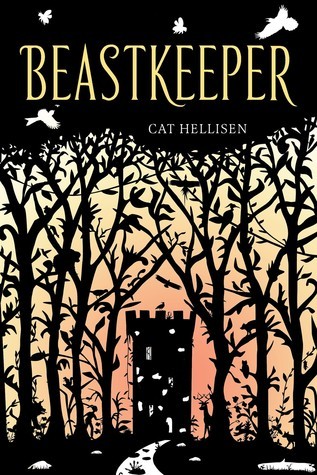
{milky sips.} Hellisen, Cat: Beastkeeper

February 3, 2015
Henry Holt and Co.
MG Fantasy, 208 pages 

Sarah has always been on the move. Her mother hates the cold, so every few months her parents pack their bags and drag her off after the sun. She’s grown up lonely and longing for magic. She doesn’t know that it’s magic her parents are running from.

When Sarah’s mother walks out on their family, all the strange old magic they have tried to hide from comes rising into their mundane world. Her father begins to change into something wild and beastly, but before his transformation is complete, he takes Sarah to her grandparents—people she has never met, didn’t even know were still alive.

Deep in the forest, in a crumbling ruin of a castle, Sarah begins to untangle the layers of curses affecting her family bloodlines, until she discovers that the curse has carried over to her, too. The day she falls in love for the first time, Sarah will transform into a beast . . . unless she can figure out a way to break the curse forever.
 

The other day, a good friend and I were talking about the middle grades we were raised on.

To properly describe it, I'd have to draw forward the example of that scene from The Lightning Thief, where Percy sips ambrosia for the first time and finds that it tastes like his mother's brownies - warm, fresh, soothing.

If I ever had the chance to taste test ambrosia for myself, I'm quite sure it'd taste like the books I chose carefully when I was younger: wild, deep-rooted in old folklore and enchantments, ancient and yet robust and timeless.

Not to say that I'd willingly drink down the taste of musty, pulpy paper and withering ink, as much as I love the real thing. I think it'd be more of a revitalizing tea or maybe a bracing lemonade laced with its fair share of sweet, earthy herbs that are wick to the very center, a few lumps of sugar to keep your spirits up as you run with wolves and hide in old hollows and maybe even find a new world where your winter coats should hang.

Lloyd Alexander, C.S. Lewis, Diana Wynne Jones (always, always Diana Wynne Jones) - they make up the core of my lifelong love story with children's fantasy.

And so, now, Beastkeeper.

The story drew me in as all those other books did: a young, empathetic heroine, an ancient family curse, stumbling through new circumstances and figuring out the set rules of magic with not much else than suspicious, talking animals, a questionable wild boy ally and previously untapped courage and love.

I am always won over by the promise of family devotion and love.

And lovely prose. The prose, more than anything else, made me settle down and make a nest for myself within the story.

To quote one of my own GoodReads status updates from last night (at only 30% into my e-ARC!): "I am starting to realize what a covetous creature I am. And why authors often compare themselves to ravens. I am highlighting words and perfect phrases to attempt to feather my own nest of impossible ideas. Cat Hellisen is pulling out all the stops of her mastery of words thus far, and I must enviously bow to the fact that I'm so very enchanted and my seven-year-old self is giddily spooning it all into her mouth."

(Another note I might add: I am quite picky about what goes into my nest.

I do not settle for any shade of yarn, any particular antique fork or old pocket watch or shining turn of phrase.

It has to be Just Right, like a tuning fork hitting the right frequency and jolting the rest of my heart into catching up and feeling like, "Yes, that word was meant to be right there."

Hearing from the author herself that she was very much inspired by classic fantasy, particularly Diana Wynne Jones - her favorite, Dogsbody, was also the very first I read! - and Susan Cooper also made me quite sure that she is very much my sort of people.)

Sarah tiptoed along the landing towards her parents' room and wondered what flavor silence was, and if it grew hard and brittle if you threw it away, or if people sometimes stepped on wads of discarded silence and it stuck to the soles of their shoes and made their footfalls softer.

And

Sarah tiptoed faster, the shadows clinging to her shoulders like shed ghost-skins.

Like that.

Exactly like that.

It also helps that Sarah is such a sympathetic wildwoods child. At times, I just wanted to hug her, to grasp her by her shoulders and tell her how I could see that she was trying, that she was giving it her all - in her body's strength and in her emotions - to figure out the tangled web around her family and the circumstances she was forced to shoulder merely for being born into a cursed family.

And that is something I feel children's literature can address so well: the prices paid for jealousy and hatred, how it really feels to struggle under a parent's sin and bear on as your normal world crumbles around you.

The particular details of the curse - how it devours her father and threatens her as well, even with her thinned blood and desperation not to succumb - are wrought in particularly deep and dark tones, and makes it all the more pressing for you to turn the page and find out how Sarah fares.

And now, a brief word on the ending. I am well aware that it will not be everyone's cup of tea. Approaching Beastkeeper as I did, with the understanding that fairy tales have evolved as they have, particularly with the knowledge that not every ending is happy (though, as you well know, many of these tales do and I myself am not at all averse to perfect conclusions), one twist in particular was very much expected.

Though it was still not that easy or less bitter to swallow.

To me, the entire denouement fit well with the story and the horrific curse as it stood. I won't say more and spoil it for you, but I am well satisfied with it and the hope that (to me) it offered for the characters when the curtains closed.

And, in a post-script of sorts: I just took a peek back at another middle grade fairy tale I read fairly recently, Ophelia and the Mysterious Boy. Within that review, I noted that young Kaye often had nightmares when reading particularly vicious and heart-wrenching fairy tales.

That fact and stage of my reading history still stands, and I think it's well noted that Beastkeeper will probably appeal in particular to the late middle grade and young adult set. There's a time for every story.

(As evidenced by the fact that I am positively licking my fingers post-Beastkeeper and not in a fit of torment.)


Of note: As I said before, the ending will not sit well with some. There is violence, some heart-breaking scenarios and death. There is also grizzly moments involving uncooked meat, brutal transformations (not the charming beast-to-man sequence found in Disney, mind) and a rather maddened witch or two.

I leave it up to the reader's discretion.

Saturday, March 8, 2014

{the house blend.} Rutkoski, Marie: The Winner's Curse (Winner's Curse #1)

March 4, 2014
Farrar Straus Giroux 
YA Fantasy, 355 pages

As a general’s daughter in a vast empire that revels in war and enslaves those it conquers, seventeen-year-old Kestrel has two choices: she can join the military or get married. But Kestrel has other intentions.

One day, she is startled to find a kindred spirit in a young slave up for auction. Arin’s eyes seem to defy everything and everyone. Following her instinct, Kestrel buys him—with unexpected consequences. It’s not long before she has to hide her growing love for Arin.

But he, too, has a secret, and Kestrel quickly learns that the price she paid for a fellow human is much higher than she ever could have imagined.

Set in a richly imagined new world, The Winner’s Curse by Marie Rutkoski is a story of deadly games where everything is at stake, and the gamble is whether you will keep your head or lose your heart.


If you ever want me to read anything post-haste, just mention “female-led” or “fantasy” – or better yet, both in the same breath.

My speed will amaze you.

Case in point: The Winner’s Curse. Last month, I was laid low with my annual bout of the flu and had nothing to do but languish with Kleenex and blankets on the couch, and turn to my Kindle for solace.

(Good old Kindle. It doesn’t judge if I’m bleary-eyed and wrapped up like a burrito.)

The previous day, I’d been fortunate enough to slip in as one of the 100 people automatically approved for The Winner’s Curse on NetGalley. The day before that, I’d been privy to an online conversation with Rachel Stark of Simon and Schuster, where she assured me that The Winner’s Curse would be the female-led fantasy of 2014.

See what she did there? My two favorite words, and a bug making sure that homework wasn’t an excuse. There was no way I wasn’t cracking that open when I had the chance.

So, The Winner’s Curse. It hinges on a world deeply inspired by Greek and Roman civilization. There were a few details that I found off-putting and slightly anachronistic:  character names here and there that felt too modern (for instance, our heroine’s best friend is named Jess), and ruffled dresses that didn’t seem in the mode of the togas and gowns we associate with those time periods.

However, for the most part, this is Marie Rutoski at her finest. The language remains simple and uncomplicated, and the imagery is overpowering and engrossing.

The plot itself is just as intriguing. Our heroine is Kestrel, daughter of a great general, who is expected on her next birthday to either enroll in the Army herself, or marry and start her own household. She isn’t really on pins and needles for any of it, which is why you can’t really be surprised when she breaks completely out of the mold and buys a slave – Arin – as an impulse purchase.

Let’s be honest: we all have those impulse purchases that we regret. And Arin isn’t just some docile guy who’s going to shoe Kestrel’s horses and kow-tow to her whims without a fight. He has his own dark secrets – not the least being the fact that his people, the people that Kestrel’s ilk now use as their servants and footstools, were once the ruling class, and he himself was nobility.

Kestrel knows she’s in over her head with him, particularly as rumors start to spread and those who are jealous of her standing start to scheme – but she can’t help where her heart draws her to.

And this, my friends, was my only problem with this storyline. As a person of color – particularly, a woman of color – I am more than aware of the historical and cultural flaws with a master-slave relationship. Even thinking of the top of my head, it is hard to picture a romance that was wanted by both parties, and would not end in heartbreak or beatings…or death.

Of course, Marie Rutoski does everything in her power to make it clear that this relationship is not easy for Kestrel as well: her reputation is at stake and Arin himself has his own agenda and potential for betrayal.

The fact that these obstacles are tossed in, as well as several moments where Kestrel has to step back and realize her privileges over Arin – and the other way around – are refreshing, and slightly relieved the uncomfortable feeling I had when Kestrel started making eyes at Arin.

Beyond the love story, though, I was really taken in by the strategy. I’m not the only one who plays video games and loves it when you really have to think about the angles you take, right? Well, the plots and trickery within The Winner’s Curse reminds me both of a really good RPG, and The Thief series by Megan Whalen Turner (which I totally love, and which I will press upon anyone who loves a good fantasy with a hint of mythology).
 

There is no knot that seems as though it could be unraveled. There were no moments when I set my Kindle down and went, “Hmm. Well, that was a deux ex machina if I saw one.”

And the ending. Guys, you know I don’t like to spoil, but is it spoiling if I just go –

!

?!

?!!!

!!!


Okay. I’m calm now. But really, the ending was what cinched the whole thing for me. I think that, even as I was gasping at the plot twists and clicking my page buttons as fast as they could go, I was still waiting for it to all come loose and end in this ridiculous, sappy “love conquers all” sort of moment.

But the ending, though. It was all I’ve been wanting in YA for like years.

The Winner’s Curse is this year’s Graceling. It’s this year’s Throne of Glass. If you guys are the types who need a gazillion comparative titles before you can be convinced to dig in, I could draw out a few more. But be sure to judge it on its own merit as well. Personally, I am hooked, and I look forward to seeing what else Ms. Rutoski has in store for us…in the sequel.

Which comes out next year.

This is why I both love and hate ARCs, guys.


Of note: Slavery. I mean, I don’t know what particularly triggers people or won’t, so if this is something that bothers you, or brings up personal unhappy memories, please be warned. There is also some violent scenes, poisons, conspiracies, discussion of infidelity, dinner parties (hey, some people don’t like those social scenes, right?) and deaths.

Batteries not included. That would be an anachronism.


Monday, March 3, 2014

{the house blend.} Hagen, Bethany: Landry Park (Landry Park #1)

February 4, 2014
Dial Books
YA Dystopian, 384 pages


In a fragmented future United States ruled by the lavish gentry, seventeen-year-old Madeline Landry dreams of going to the university. 

Unfortunately, gentry decorum and her domineering father won't allow that. Madeline must marry, like a good Landry woman, and run the family estate. 

But her world is turned upside down when she discovers the devastating consequences her lifestyle is having on those less fortunate. 

As Madeline begins to question everything she has ever learned, she finds herself increasingly drawn to handsome, beguiling David Dana. 

Soon, rumors of war and rebellion start to spread, and Madeline finds herself and David at the center of it all. Ultimately, she must make a choice between duty - her family and the estate she loves dearly - and desire.


By now, you should probably get the idea that I’m not really the go-to girl for dystopians.

That doesn’t mean I don’t like some of them. I even wrote one, back in the day (read: back when the idea of querying a dystopian didn’t mean facing a saturated market of some pretty awesome titles). 

In any case, though, I can be swayed for some rare exceptions. I happened to place a hold on Landry Park – without looking at the genre – and when it came, I read it anyway and put my usual expectations about the genre on hold.

First off, I must give kudos where it is definitely due. One of the reasons why I steered clear of dystopians in recent years is because many seem to come from the same mode – complicated world-building, and a lot of talk and little going. 

Bethany Hagen does an awesome balance act between high society and government rebellion. The writing is very crisp, concise and descriptive. She switches between a debutante scene and a tense crowd with ease.
This is a woman who knows how to wield her pen. Bravo, Ms. Hagen! 

(I just wanted to get that out there, because if you know me, you know that words matter. A lot. I can be won over, even if the story isn’t usually what I’d read, if I’m getting some good voice and mechanics in the bargain.)

If you’ve read the summary for Landry Park, you probably saw the most confusing, and yet enticing, comparative titles ever: Downton Abbey meets The Selection.

I have personal reasons for not ever having picked up The Selection (and most of those reasons go hand-in-hand with me not being the type of girl for dystopians), and, surprisingly, though I’m a period drama fan, I haven’t seen any of Downton Abbey.

But, unlike The Selection, I do have a gist of some of the scandals and sob scenes that do go on in good old D.A. (*cough cough* Lady Mary Crawley *cough*), so I can tell you that this title – as odd as it sounds – is legit.

Let’s get down to the meat of Landry Park. Our heroine, Madeline Landry, is a heiress in a futuristic world where the gentry flourishes. Madeline wants her chance to flourish, too, through a stint in university, but her father would rather her settle down ASAP, and have some grandkids to inherit their wonderful lineage. 

(I did wonder how Daddy Dearest expected Madeline to know how to manage the estate without proper schooling. It wasn’t as though she was asking for a million-dollar yacht or anything that required money going down the tube for good.)

Anyway, through a twist of fate, Madeline gets tossed into a scandalous situation which involves her being taken out of her comfort zone and seeing that there are other people involved in her glorious world – the Rootless, or the poor class. 

This is the main part that stuck in my gullet. I know that this is something that happens in real life – rich girl suddenly realizes a compassion for the ‘little people’ and goes all savior and visits Africa and talks at Oscar speeches about how ‘helpless’ the people are – but it doesn’t make Madeline’s “I am a hero of the poor” savior mode less offensive, or easy to swallow.

I know there are people who genuinely give their lives for others, and I appreciate every one of them. But the fact is, Madeline doesn’t come off that way. She feels like she’s forcing it, and, compared to the romantic subplot that I’ll be pointing my (figurative) laser pointer at in a few sentences, it’s more of a hobby than an actual burning aspect of her motivations.

It didn’t make me hate her – but my like-o-meter did go a teeny bit down.

So I mentioned that we do have a Matthew Crawley for our somewhat Lady Mary (a.k.a. Madeline), who is referred to as David Dana within Landry Park’s parameters of fiction.

David seems pretty into Madeline when they meet, but then he makes a point of debuting – a.k.a. pretty much stating his intention to court and eventually marry – Cara, Madeline’s sort of childhood friend, who also has brought Madeline into the Rootless drama by accusing a Rootless man of attacking her and bruising her.

Well, fine. That would make a girl look elsewhere, right? Except that Madeline cannot let it go. David makes an overture. Madeline sways toward him. Enter Cara, giving them suspicious looks. David switches his affectionate overtures to her.

To me (even though it all ends in the requisite ‘I do have feelings for you’ and dumping of the other girl, who thankfully was glad to be dumped, and I don’t blame her), David was a right cad. I couldn’t find it in me at all to see him as the dashing hero, and, like Madeline’s involvement with the Rootless, his enthusiasm for helping them just really rubbed me the wrong way.

Beyond these aspects, though, I can definitely give Landry Park its fair amount of recognition for an engaging and desperate climax. The bad guys get theirs, a shocking family secret comes to light in true period drama tradition, and – yes – there are the appropriate confessions of love and not really being in love after all and coupling off.

Like I said, I’m very rarely swayed by dystopians. Landry Park was an entertaining read, but overall, not the weight needed for my personal scale to lower to the right side – but, my appetite was whetted by Bethany Hagen’s writing and her creativity, and I look forward to whatever else she will have to offer.


Of note: Attempted assault, child abuse on the part of a parent, some tense action scenes and one awful attempt of violence and coerced poisoning on a child that did bother me a little bit. Nothing dirty to stain your pretty gown, though.


Monday, February 3, 2014

{milky sips.} Foxlee, Karen: Ophelia and the Marvelous Boy

January 28, 2014
Knopf Books for Young Readers
MG Fantasy, 240 pages


I received an advance electronic copy of this title from the publisher, in exchange for a fair and unbiased review.

Unlikely heroine Ophelia Jane Worthington-Whittard doesn't believe in anything that can't be proven by science. She and her sister Alice are still grieving for their dead mother when their father takes a job in a strange museum in a city where it always snows. On her very first day in the museum Ophelia discovers a boy locked away in a long forgotten room. He is a prisoner of Her Majesty the Snow Queen. And he has been waiting for Ophelia's help.

As Ophelia embarks on an incredible journey to rescue the boy everything that she believes will be tested. Along the way she learns more and more about the boy's own remarkable journey to reach her and save the world.

A story within a story, this a modern day fairytale is about the power of friendship, courage and love, and never ever giving up.


To be honest, as a kid, I was never really a dark and dreary fairytale sort of person.

One time, I had nightmares because I read a version of East of the Sun, West of the Moon complete with the gory “chop off your pinkie for your true love who turned into a bird and flew off because YOLO” scene. 
 
My mom banned me from the collection of fairy tales for the next few months.

As a brief note on exactly what kind of kid I was, I then merged from fairy tales into Goosebumps. At night. With dim lighting on. (What kind of kid was Kaye back in the olden days? One who didn’t take a hint from her dreams and liked to scare herself silly.)

So, keep in mind that Ophelia and the Marvelous Boy is a story that young Kaye would have devoured, and then scoured the entire household for a flashlight or two to keep herself company afterward.

Ophelia starts out deceptively light – to the point that I nearly put it aside, because the text seemed so very simplistic and childish. I will note that I adore picture books, and they have their warm, fluffy place in my heart even now. However, once you reach the middle-grade tier of titles, you expect something a bit more mature, something a reader – even one outside of the age group – can sink their teeth into without feeling inappropriately condescended.

In picture books, we find happy, small sentences for happy, small fingers: “She went up. She went down. She went into town.”

Ophelia has similar adventures, when she first starts exploring the mysterious museum that is her temporary home, and prison to the aforementioned Marvelous Boy she will need to rescue. She ventures into big halls. She ventures into little halls. She stops to take a peek at something incredible…and then she wanders out again.

It may seem all too light and easy – at first. Because then she finds the Marvelous Boy. And then you have these morbidly engrossing recaps of his adventure and his mission against the evil Snow Queen (not at all an Elsa, mind you – a child-slaying, land-freezing, cold-hearted witch) to look forward to.

Including one brilliant segment where one of the Queen’s evil owls EATS HIS FINGER in a trade, to cast a protective spell on him. There’s more to the scene than that, and it all does make sense once you read it, but that was definitely a point where younger Kaye would start checking her closet and outside her window to see if a snowfall was starting up.

This is not a picture book, ladies and gentlemen. This is a fairy tale that Neil Gaiman or Roald Dahl or Hans Christian Anderson would be proud of. This is the story of a queen who wants to kill a boy so badly that she will lock him up, and wait years to kill him before he can kill her. (I suppose some people would point out that two wrongs don’t make a right, but still.)

This is the story of a little girl, overcoming her grief for her lost mother, and finding her own ways to be brave while facing down man-eating birds, and asthma attacks, and her own young mortality.

And it all works – deceptive language and all. Perfectly. Though I have to admit, there were times I regressed to young Kaye and squeezed my eyes shut before I pressed forward on my Kindle, ready for the worst possible scenario.

(I am only just starting to realize that I was a bit of a softie, back in the day. Considering the way that I torture my own characters now, I wonder where that went.)

The thing was, you can overlook everything that might go wrong for Ophelia. I loved Ophelia. She was the type of plucky Everygirl that you want to see in fiction – the girl who could be next door, or you, just waiting for some evil undead ruler to rise up so that you can set aside your meek and mild-mannered ways and dig down deep to the hero within.

Ophelia has her little ‘puffer’, her quirks and sensibilities – including rejecting all the fantastic beliefs of her lost writer mother – and she has her doubts about a quest for a strange little boy locked away in a museum who has to kill a snow queen. And that is another beautiful thing about this book: it turns expectations on its head.

Ophelia is the type of girl that many would pat on the head and tell her to sit down, and catch her breath, and look at the pretty museum murals while thinking of a way to convince her father to carry out the quest for her. But she doesn’t.

I’ve seen complaints from other reviewers on GoodReads, mainly along the lines of this having been done before, and being done better. The fact is, there is no new fantasy under the sun. Everyone takes out some stitches, adds a few new patches, and their own twist of whimsy locked up inside like a Build-a-Bear heart.

That is what is done here, and I won’t say that it couldn’t have been done better. But it was done the way it was supposed to be done here (though I could have done away with that gratuitous finger-eating scene. That brought back some memories. Not good ones).

If you like Claire Legrand, as I do, you’ll enjoy this. If you enjoy stories where the children win in the end – but not without a lot of gasping and cringing – you’ll enjoy this.

 
Of note: Mild violence of the fairy tale variety, threats against young children, and some hair-raising scenes that are not out of the norm for the middle-grade set. If you are timorous or faint of heart, you’ll survive. Just keep your flashlight at the ready.