You have set a pair of iron shoes in front of me.
This is not a fairy tale. I am not your resentful, salt-cheeked stepdaughter. I am not a prisoner of circumstance and squandered riches. And yet, you set a pair of iron shoes before me, snaggle-tooth nails leering from the forbidding seams, still stained with the last victim's blood and tears and insurmountable pain.
They are not my shoes. You say that they are not, do not take this personally. They belong to someone else: someone neither of us has seen, except in mere fluttery flashes of their being wandering by, moving like air or dust motes out of my grasp before I can grasp them by the collar, shake out their sins from between their clenched teeth, force their feet in the shoes you have created so kindly, so thoughtfully, for them to dance in so that my own small, nervous toes will not be punished by proxy.
It is because I look enough like them, or what you know of them, what you expect of them. That is what you say, do not take this personally. You have seen their eyes, their skin, their teeth, and cobbled them together into a beast of your own creation. You present this portrait to me as I inch back from the hateful shoes, the unwanted manacles, pointing out the resemblances in my brow, my last name, my faith.
They are my shoes now, because you are insisting that they are, they must be so.
And yet, I will not step forward to be shod and shredded down into submission.
Stereotypes are painful, horrible things. They masquerade as justifiable logic, reasonable generalization, practical and pragmatic constructs that you unfold like cardboard boxes and stack your expectations of other people in, so you can unpack them when desired and force them to chew and swallow, smiling at you pleasantly (they must smile pleasantly, always, when you dissect them by what you've heard in the news or what you've read in your latest novel, or what your grandmother told you about people like Them).
Some are more easily identifiable than others. They have been washed and worn and their threads have faded out. They sneak about and jump back into the shadows when we point an accusatory finger in their directions. We tug them away from the shoulders of our friends, toss them down on the ground and break them down to their base substances: envy, prejudice, sheer ignorance, hate.
The presence of the marginalized villain, though, is one that continues to be perpetuated. It is reasonable, I am told, do not take it personally. People like you are not people like us. People like you, even if you insist, you prove, you close your eyes and scream into the masses that they are not at all like you, are bad people.
Every group of people has bad people. But how many other bad people do you see who are not brown-skinned, have a certain shape in their eye or tilt to their nose or accent to their voice? How many bad people do you see that fit that iron shoe, continuously, constantly: who fall into outdated, ludicrous tropes, wear down their daughters to rag and bone?
Every group of people has bad people. That is what you tell me, do not take it personally, when you insist, you protest, you beg to be allowed just one villain in your story line that is based off horrific, skewed, easily identifiable stereotypes of people like me. Every group of people has bad people.
You are not special.
You are not singled out.
You should sit down. Be silent. Just wear the shoe that doesn't fit you, that cramps you, that confines you, that isn't who you are.
Here is what you need to hear. Here is what you need to know.
No. This is not my shoe to wear. Not because you say, not because you assume I will happily chew and choke down your kind "reclaiming," "unpacking", "nuanced" representation of an already tired presence in every story you claim features and stars me.
This is not my shoe to wear. This is not my pockmarked, dark soul you attempt to pin to my back. This is not the microaggression you try to shape and mold me to accept, to swallow down every time: "violent," "disloyal", "hateful," "angry," not like us, not like us, not like us.
Marginalized presences as villains, each and every time, do nothing to our progress. It does nothing for my voice, for me, to open another novel, another perceived harbor of comfort, to have the gates drawn in my face by the shrouded, veiled figure or desert dweller or backwards immigrant parent tethering their child to the window sill where they can sing their songs to the sympathetic world spread beneath them and get fresh air and stay where they are, wither away where they are.
This is not my shoe to wear. I will not believe my foot is fitted to it, that you do me a favor by creating it, that it is nothing personal to assume I will wear it, that I will understand it, that I will gladly pay money and choke it down and swallow it (always with a smile, no offense taken, that is the way things are, that is the way we are) when it is presented to me on a plate.
I am saving my feet, treating them tenderly, for the soft, silken slippers they are meant to wear: the truth that my tongue will savor, will slide down my throat with a gentleness, a soft surety that this is right, this is who I am, this is my soul and my shoe to wear and I am pleased with it.

Showing posts with label diversify. Show all posts
Showing posts with label diversify. Show all posts
Monday, November 9, 2015

Friday, September 25, 2015
When You Ask Me About Diversity. (Or, When I Have No Other Words to Give.)
At all
times, I hold a fistful of words.
They are
the words I think will sound the best. The ones that have always served me the
best. The ones that, like a sword shoved into the hands of a farmhand selected
by destiny – that very first, crisp phrase at the beginning of a novel – have
come to an understanding with my grip and grasp of how they should be used.
Some of
them look like this:
You can do it.
I know you can.
Some of
them I clench my palm around until it is sweaty and white-knuckled and painful:
But…there’s a caveat here.
But...I’m not sure how you will
take this.
I never
feel like the right person to share those words. I've been told, repeatedly, I am qualified: by who I am, what I've lived. I do it, daily. I always keep
my face forward, too tempted to constantly glance over my shoulder for the
bridges I am sure I am burning in my wake.
When you
ask me about diversity, I want nothing more than to hold your hands and tell
you, firmly, that I want nothing more than to tell you the exact right words,
the words you need to hear most, the words that will unstopper your voice and heal
hearts and open minds.
As a
marginalized woman, I understand the temerity that comes with these
conversations. I understand – raw and deep – the bruises, the scrapes, the
eternal sense of, “No one wants to hear me. I’m not worth hearing. No one wants
to read about me. I’m not worth reading about.”
When you
ask me about diversity, I want to tell you, “Having this dialogue always feels
like I’m holding a raw egg as I speak. My fingers are clenching, and
unclenching, and sooner or later I will say the wrong thing or squeeze down too
hard and I’ll find myself slick with shame and raw yolk.”
This
year, I’ve spoken multiple times online, and once, in person, on diversity. I
offered the words that felt right when I weighed them in my hand. I offered the
words that I hoped would do no harm, that in turn would educate those who heard
me to do no harm to others.
I am not
sure why you ask me about diversity. I want to think it is because you are
looking for someone who understands the bruises, the scrapes, the eternal sense
of, “No one wants to hear me. I’m not worth hearing. No one wants to read about
me. I’m not worth reading about.”
I want
to think, if you are not a marginalized voice yourself, you want me to hold
your hands and tell you, firmly, that I want nothing more than to tell you the
exact right words, the magic words, the words that will heal hearts and open
minds and reach out to others.
I am not
sure what else I can tell you that hasn’t already been said, by more qualified,
more eloquent voices. I am not sure what else I can tell you that hasn’t
already reached deep into my wrung out heart, made every word that came out
after it seem trite and redundant and overly dramatic and not worth the
telling.
Tonight,
I am not sure what else to say, except that the conversation so often gets so
convoluted and painful. So often, people’s words and hearts and experiences are
swept away and under the rug.
When you
ask me about diversity, I want you to keep asking, and keep asking, as long as
the words you offer are polite and sincere and true. I want to tell you to set aside privilege, old expectations, barbed stereotypes.
I want to tell you: I just worry that I’m
not offering you the right words to keep going.
When you
ask me about diversity, I hope that my answer is enough to keep the
conversation going where it needs to go, so change can follow in its wake. And
hope that it is enough to satisfy the question that was asked. And hope that it
will be taken the right way, that it will not wound, that it will not be used
to wound me.
At all
times, I hold a fistful of words.
They are
the words I think will sound the best. The ones that have always served me the
best.
Tonight,
some of them look like this:
I am here and I am trying.
You are here and you are trying.
Do no harm.
Cut no corners.
Keep writing.
That’s all we can do.
Sunday, April 12, 2015
Diversify! - [Let's Level] The Real Issues of Muslim Representation, Part I
This afternoon, the wonderful Angie Manfredi (librarian extraordinaire and
diversity advocate) linked me and author Aisha Saeed to the 2015 official
poster for Banned Books Week. This poster is currently available in the ALA
Store and can be viewed there, but for my readers, I’m also adding it below.

Angie wanted our reactions as Muslim women, and mine was
almost instantaneous. I spent another five minutes trying to give ALA, and the
designers, the benefit of the doubt. But it soon became clear that I just
couldn’t. It was just too blatant, and many other friends, both Muslim and
non-Muslim, reacted with the same discomfort and anger.
If you look at the image, you can see that the design forms
a veil over the model’s face. That, coupled with the fact that the model is
otherwise dressed rather “skimpily”, in Angie’s words, quickly draws the mind
to the usual stereotypes about the oppressed, repressed Muslim woman, smothered
by her veil and her “backwards” faith.*
(I’ve heard this directed at me so many times, but typing it
out always gives me another little twinge of irritation.)
Added on top of this already problematic suggestion is the
accompanying text: a big, red “Readstricted,” and the fine print that reads, “Warning:
Banning Books Restricts Our Freedom to Read.”
I’m not going to lie: in 2015, coming up on the anniversary
of the initial #WeNeedDiverseBooks campaign, from an organization that has a young
hijaabi librarian that I personally know as one of its 2015 Emerging Leaders…
I am not amused. I am not amused at all.
Since I know I can get incoherent when on a tear, I’m
parsing this down to two main points.
(Honestly, I’m a big fan of three, since
three is a magic number and all, but…let’s stick to the basics of this
situation and why it’s concerning.)
Tuesday, August 5, 2014
Diversify! - [Author Pack] Delilah S. Dawson
Welcome to the second (very belated) installment of Diversify! If you aren't sure
what is up with the flaring capes, legendary names and razor-sharp wit, click here to see my official announcement for my new blog series (the
long and short of it: a celebration of the people who make diversity
possible in this industry and are working toward change).
Today's post is special, as a) it is a Tuesday, and b) it is this particular heroine's book birthday, which is a very lovely and momentuous occasion indeed and deserves all the bombarding of social media. So Diversify and I are striving to do our part.
Please note: I'm adding a minor warning here because Delilah does discuss abuse and assault in her past. Just keep that in mind.
 Delilah S. Dawson
Author of Servants of the Storm
ATK 100 + a book birthday boost of 50
DEF 100 + a book birthday boost of 50
Power Up Items: Coffee and cake
At arms, if you dare. Delilah's armed with wit, charm and experience in fencing and muay thai - and she's not afraid to use them.
Delilah S. Dawson's power as an author rests in compassion and the need to offer teen readers a different point of view.
"Writing diversity is an effort to show a world beyond my own, beyond the default that's surrounded me all my life. Not that it's been an easy life. As a kid, I lived with alcoholism and domestic abuse, and as a teen, I survived rape and suicide.
I found comfort in fantasy and horror fiction, in worlds that showed the secret darkness I was living while the outside of our house looked All-American and happy. And as an adult, I want to reach out to a wide range of teens and reflect what they're living or give them an escape of their own."
Because she's a woman, Delilah is aware that some enemies will think they can get the jump on her under the assumption that she'll just hang back and let them hit first.It's why the Unexpected Flurry Attack is her special technique, in writing as well as fencing and muay thai.
Think she'll let you get the better of her?
You'd better have an ice pack or two ready for when she wipes the floor with you.
If Delilah and her protagonist, Dovey, had to pair up and take down the forces of evil, their main strategy would be to "shoot anything with fox ears".
Delilah's past, and her exterior appearance, are another reason why writing diversely appeals to her.
 "As my picture will tell you, I am not particularly diverse on the
outside. I'm a married, suburban white mom. More distinctly,
I'm a Southern mutt, with no family traditions, histories, or origins.
We don't even know where my ancestors came from. Basically, it's boring
white people as far as the family tree can drop us. I've always been
jealous of people with deep ties to place, with culture, with roots,
with more than jeans and an American flag t-shirt as our national
costume. My parents valued being normal and conservative and
close-minded. And I didn't."
"As my picture will tell you, I am not particularly diverse on the
outside. I'm a married, suburban white mom. More distinctly,
I'm a Southern mutt, with no family traditions, histories, or origins.
We don't even know where my ancestors came from. Basically, it's boring
white people as far as the family tree can drop us. I've always been
jealous of people with deep ties to place, with culture, with roots,
with more than jeans and an American flag t-shirt as our national
costume. My parents valued being normal and conservative and
close-minded. And I didn't."
Delilah sees her writing diverse characters as important, particularly after having a lack of diversity in her first two titles pointed out by a reader.
"I realized I hadn't even noticed it. So I started finding ways to incorporate a more diverse cast. It's a great way to rebel while doing something useful. My readers deserve a world that reflects them."
Servants of the Storm, which releases today, is described by Delilah as "a paean to friendship and fighting for what's right as much as it is a creepy Southern Gothic story about demons in Savannah. I hope readers will appreciate Dovey's tenacity and loyalty to Carly and enjoy her adventure."
More power to you, Delilah. Keep up the good fight!
Today's post is special, as a) it is a Tuesday, and b) it is this particular heroine's book birthday, which is a very lovely and momentuous occasion indeed and deserves all the bombarding of social media. So Diversify and I are striving to do our part.
Please note: I'm adding a minor warning here because Delilah does discuss abuse and assault in her past. Just keep that in mind.
Author of Servants of the Storm
ATK 100 + a book birthday boost of 50
DEF 100 + a book birthday boost of 50
Power Up Items: Coffee and cake
At arms, if you dare. Delilah's armed with wit, charm and experience in fencing and muay thai - and she's not afraid to use them.
Delilah S. Dawson's power as an author rests in compassion and the need to offer teen readers a different point of view.
"Writing diversity is an effort to show a world beyond my own, beyond the default that's surrounded me all my life. Not that it's been an easy life. As a kid, I lived with alcoholism and domestic abuse, and as a teen, I survived rape and suicide.
I found comfort in fantasy and horror fiction, in worlds that showed the secret darkness I was living while the outside of our house looked All-American and happy. And as an adult, I want to reach out to a wide range of teens and reflect what they're living or give them an escape of their own."
Because she's a woman, Delilah is aware that some enemies will think they can get the jump on her under the assumption that she'll just hang back and let them hit first.It's why the Unexpected Flurry Attack is her special technique, in writing as well as fencing and muay thai.
Think she'll let you get the better of her?
You'd better have an ice pack or two ready for when she wipes the floor with you.
If Delilah and her protagonist, Dovey, had to pair up and take down the forces of evil, their main strategy would be to "shoot anything with fox ears".
Delilah's past, and her exterior appearance, are another reason why writing diversely appeals to her.
"As my picture will tell you, I am not particularly diverse on the
outside. I'm a married, suburban white mom. More distinctly,
I'm a Southern mutt, with no family traditions, histories, or origins.
We don't even know where my ancestors came from. Basically, it's boring
white people as far as the family tree can drop us. I've always been
jealous of people with deep ties to place, with culture, with roots,
with more than jeans and an American flag t-shirt as our national
costume. My parents valued being normal and conservative and
close-minded. And I didn't."Delilah sees her writing diverse characters as important, particularly after having a lack of diversity in her first two titles pointed out by a reader.
"I realized I hadn't even noticed it. So I started finding ways to incorporate a more diverse cast. It's a great way to rebel while doing something useful. My readers deserve a world that reflects them."
Servants of the Storm, which releases today, is described by Delilah as "a paean to friendship and fighting for what's right as much as it is a creepy Southern Gothic story about demons in Savannah. I hope readers will appreciate Dovey's tenacity and loyalty to Carly and enjoy her adventure."
More power to you, Delilah. Keep up the good fight!
Be part of the change we need. Be a hero. Diversify.
Monday, May 19, 2014
Diversify! - [Author Pack] Ellen Oh
Welcome to the first installment of Diversify! If you aren't sure
what is up with the flaring capes, legendary names and razor-sharp wit, click here to see my official announcement for my new blog series (the
long and short of it: a celebration of the people who make diversity
possible in this industry and are working toward change).
Since my last post on my involvement with the #WeNeedDiverseBooks team, our little campaign has sprouted legs and run off with farther results that we'd expected or even hoped for. It's been wonderful to see submissions still pouring in, people touched by the campaign and reaching out to support, and a general sense that yes, diversity is needed, and we can all make it happen.
With that in mind, I thought it'd be perfect to kick off Diversify! (and postpone my rather dry FAQ I've been preparing until the end of the week) with a real-life hero that is rocking your social media.
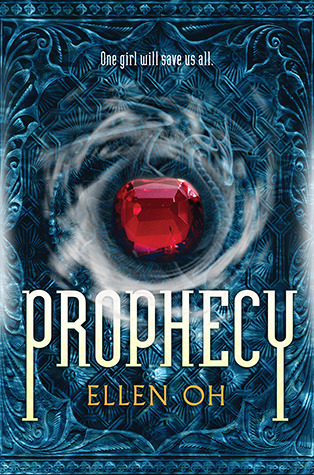
 Ellen Oh
#WeNeedDiverseBooks Team Leader
Author of the Prophecy series (HarperTeen)
ATK 100
DEF 100
Power Up Items: Donuts, French Fries, steak, chocolate or cake
The brains behind the #WeNeedDiverseBooks initiative, Ellen combines her smarts with a deadly knowledge of the art of pointy stick warcraft.
(Hide your toothpicks.)
Ellen Oh is a force to be reckoned with.
A self-described "bull headed Taurus", she admits that when someone tells her she can't do something, she sets out to prove them wrong.
"The importance of diversity was programmed into my DNA, I think. I've always been about equality and justice - it's why I became a lawyer. As a lawyer, I saw so much sexism in my professional life that it was galling. And racism was something I had dealt with all my life. So how can I not stand for diversity?"
If your strategy for battle is to wait it out until a hero gets tired, you'll be waiting a long time on Ellen.
 "People always ask me, "Don't you get sick of getting up on your soapbox?" And I say "No matter how old and infirm I get, I'll still roll my wheelchair up on that diversity soapbox. Until the day I don't need to do it anymore."
Ellen has another personal incentive for fighting for diversity: her daughters.
"I'm Korean American and I have three daughters who are also Korean American. Diversity became a huge issue for me when my first daughter was born and I went looking for kids' books that she could relate to and came up short."
Times are changing, and with every step Ellen takes in the battle for diversity and representation, she hopes they are for the better.
"When I was young, finding a strong girl hero was really difficult. But times have changed in that respect. Now it's up to us to do the same for authors of underrepresented groups that have long been marginalized. And I won't stop until progress is made!"
Don't get on her bad side, folks. Her attack level won't fall until change happens, but yours might.
Since my last post on my involvement with the #WeNeedDiverseBooks team, our little campaign has sprouted legs and run off with farther results that we'd expected or even hoped for. It's been wonderful to see submissions still pouring in, people touched by the campaign and reaching out to support, and a general sense that yes, diversity is needed, and we can all make it happen.
With that in mind, I thought it'd be perfect to kick off Diversify! (and postpone my rather dry FAQ I've been preparing until the end of the week) with a real-life hero that is rocking your social media.
#WeNeedDiverseBooks Team Leader
Author of the Prophecy series (HarperTeen)
ATK 100
DEF 100
Power Up Items: Donuts, French Fries, steak, chocolate or cake
The brains behind the #WeNeedDiverseBooks initiative, Ellen combines her smarts with a deadly knowledge of the art of pointy stick warcraft.
(Hide your toothpicks.)
Ellen Oh is a force to be reckoned with.
A self-described "bull headed Taurus", she admits that when someone tells her she can't do something, she sets out to prove them wrong.
"The importance of diversity was programmed into my DNA, I think. I've always been about equality and justice - it's why I became a lawyer. As a lawyer, I saw so much sexism in my professional life that it was galling. And racism was something I had dealt with all my life. So how can I not stand for diversity?"
If your strategy for battle is to wait it out until a hero gets tired, you'll be waiting a long time on Ellen.
"People always ask me, "Don't you get sick of getting up on your soapbox?" And I say "No matter how old and infirm I get, I'll still roll my wheelchair up on that diversity soapbox. Until the day I don't need to do it anymore."Ellen has another personal incentive for fighting for diversity: her daughters.
"I'm Korean American and I have three daughters who are also Korean American. Diversity became a huge issue for me when my first daughter was born and I went looking for kids' books that she could relate to and came up short."
Times are changing, and with every step Ellen takes in the battle for diversity and representation, she hopes they are for the better.
"When I was young, finding a strong girl hero was really difficult. But times have changed in that respect. Now it's up to us to do the same for authors of underrepresented groups that have long been marginalized. And I won't stop until progress is made!"
Don't get on her bad side, folks. Her attack level won't fall until change happens, but yours might.
Be part of the change we need. Be a hero. Diversify.
Subscribe to:
Posts (Atom)